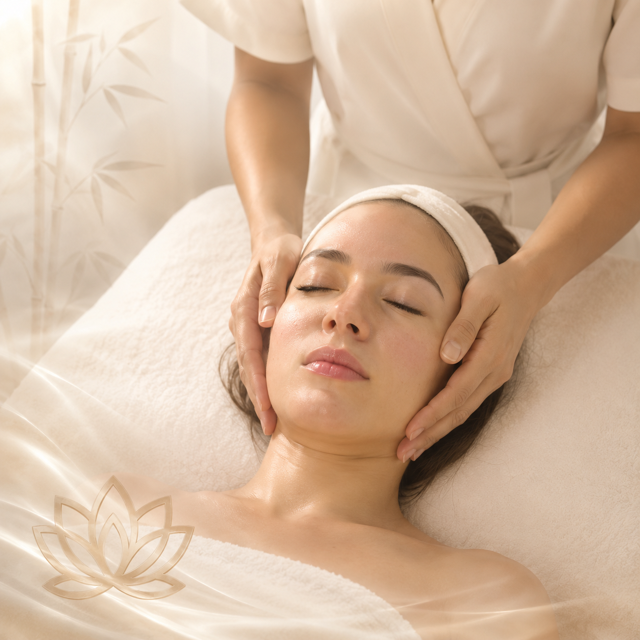
Touch is one of our earliest experiences in life.
We perceive it long before we understand spoken words. A hand that holds us. An embrace that calms us. A movement that says: you are safe.
As we grow older, however, the meaning of touch becomes increasingly complex.
It can be associated with love, trust and acceptance. But it may also be connected to uncertainty, discomfort or a memory that we do not like to discuss.
The same touch may feel soothing to one person while creating tension in another.
Touch is therefore never merely a movement.
It carries a story.
The question is what it means to us.
The memory of touch
Our body remembers many things.
We may remember how it felt when somebody held our hand as a child when we were frightened. The embrace of someone we loved. A moment when somebody stroked our hair in a reassuring way.
But we may also remember situations when a touch was unexpected, uncomfortable or unwanted.
These experiences can influence the way we later respond to physical closeness.
Some people accept touch easily and connect with others naturally through it. Others require more time, distance and trust. Some enjoy touch in certain situations but feel uncomfortable with it under different circumstances.
None of these reactions is better or worse than another.
A personal boundary is not a fault that needs to be explained.
It is a signal that deserves respect.
What does the way you receive touch reveal about you?
Perhaps you find it easy to surrender to a treatment.
You close your eyes, relax and feel safe. For you, touch represents calm, care and rest.
Perhaps you find it more difficult to relax at first.
You follow the movements, your body remains more tense and you need time for trust to develop.
You may welcome the touch of certain areas while preferring others to be avoided.
Perhaps you feel uncomfortable when somebody comes too close. Or maybe you find it difficult to speak up when a movement becomes unpleasant because you do not want to offend the professional.
These responses may contain important information.
Not so that we can judge them, but so that we can understand ourselves more deeply.
How do I experience closeness?
Do I trust other people easily?
Can I say when something does not feel right?
Do I believe that I have the right to choose?
Do I allow myself to receive attention and care?
During a treatment, we may sometimes learn something not only about our body.
But also about the way we connect with others.
Touch can be the language of trust
Trust does not automatically arise when a client lies down on a treatment bed.
Trust is built continuously.
Through the professional’s tone of voice. Through the way she provides information. The way she asks questions. The way she hears and respects the answer.
Through the rhythm of her movements.
Through silence.
And through the client’s sense that she does not have to tolerate anything she does not want.
Safe touch communicates:
“I am paying attention to you.”
“I am not rushing through your treatment.”
“I see not only the area being treated, but also the person.”
“Your boundaries matter here.”
Trust cannot be demanded.
It is not automatically owed to a professional.
It must be earned through attention, consistency and respect.
Touch and acceptance
Many of us relate to our bodies critically.
We focus on the areas we do not like. We search for faults, compare ourselves to others and may worry that the professional sees the same things in us that we criticise.
During a treatment, therefore, technique is not the only thing that matters.
The way the other person looks at us and touches us matters too.
Professional, non-judgemental touch can communicate:
“Your body is not an inconvenience.”
“You do not need to feel ashamed.”
“In this moment, you do not have to change in order to receive attention and care.”
This does not mean that all our insecurities will disappear during a single treatment.
A respectful experience can, however, gently show us what it feels like to be present in our body without needing to defend ourselves or meet expectations.
We must also learn to receive
Many of us find it easier to give care than to receive it.
We naturally reach out towards others. We help, pay attention and provide support. But when we find ourselves on the receiving side, we may struggle to release control.
We may feel that even while resting, we ought to be doing something. We fill the silence with conversation. We watch the time. In our mind, we are already planning the next task.
But receiving care is not passivity.
It is trust.
It is allowing ourselves, for a short time, not to have to keep everything under control.
Perhaps one of the deepest questions associated with touch is this:
Do I allow myself not only to give, but also to receive?
The boundaries of touch
Every person’s body belongs to them.
This is the foundation of every safe and professional treatment.
A client’s consent is not a single, automatically valid yes that applies to every movement from the beginning to the end of the treatment.
Consent can be changed or withdrawn at any time.
The client may say:
“I do not want this area to be touched.”
“Please use a gentler touch.”
“I would like to pause for a moment.”
“I do not want to continue with this now.”
These are not inappropriate statements.
They are not a rejection of the professional’s work.
They are valid decisions concerning one’s own body.
A conscious therapist does not take offence at a boundary.
She listens, accepts it and adjusts the treatment accordingly.
Safe touch is not safe simply because the professional considers it appropriate.
It becomes safe when the client also experiences it as such.
What does the therapist’s touch communicate?
A therapist’s hands convey more than technique.
They also convey the professional’s inner state.
Touch can be rushed, uncertain or impersonal. But it can also be calm, confident and attentive.
The client often senses the difference even if she cannot put it into words.
She senses when the therapist is genuinely present.
She may also notice when the professional is physically standing beside her but is already somewhere else in her thoughts.
It is therefore important for the therapist to pay attention to herself before the treatment.
How am I breathing?
Am I tense?
Am I rushing somewhere in my mind?
Have I brought the previous client’s story with me?
Am I able to meet the person in front of me with clarity and calm?
Conscious touch begins with our own arrival in the present moment.
Not every touch needs to be the same
A professional treatment is not personalised because we invent a different technique for every client.
It is personalised because we adapt the same professional system to the feedback, condition and boundaries of the person in front of us.
Some people prefer a firmer touch.
Others need gentler and slower movements.
Some clients would like to talk during the treatment.
Others can relax fully only in silence.
Some clients feel safe quickly. Others need more time for trust to develop.
A conscious therapist does not rush this process.
She does not take the client’s caution as a personal offence.
She gives her space.
When a card helps express what we cannot put into words
It is not always easy to say what we need.
Perhaps we only feel that we are tired. That too much has happened. That we long for silence but do not know how to ask for it.
The Zen Blessing client cards can help with this.
A chosen card can gently indicate the quality the client longs for in that moment. Calm, safety, release, acceptance or simply the opportunity not to speak for a while.
A card is not a diagnosis.
It does not determine what is happening within the client, and it does not replace psychological or other professional care.
It is a point of connection.
An opportunity for a sentence to begin, or for silence to remain respected.
For the therapist, it is also a reminder:
Do not assume that you know what the other person needs.
Pay attention.
Ask.
And accept the answer.
Therapist cards: turning our attention towards ourselves
The therapist cards may offer more than professional guidance.
They can also help the professional turn towards herself for a moment.
To pause before a treatment and ask:
What condition am I in?
What am I carrying with me right now?
What do I need to be aware of so that I can remain clearly present?
What does my touch communicate today?
A card cannot perform the inner work for us.
But it can stop us for a moment.
It can offer a single thought to accompany us throughout the treatment. It may remind us of patience, boundaries, silence, acceptance or the importance of a conscious closing.
The cards are therefore not separate accessories.
They are tools of conscious presence.
The Zen Blessing book: the philosophy behind the movements
The Zen Blessing Massage book seeks to present more than movements and treatment steps.
It also aims to convey the way of thinking from which those movements were born.
Because technique alone does not create trust.
A precisely executed movement can still feel impersonal if there is no attention behind it. A simple touch, however, can be deeply calming when accompanied by respect, presence and safety.
This is why the book, videos, therapist cards and client cards are connected.
The book provides the professional foundations and underlying philosophy.
The videos make the movements and their rhythm visible.
The cards help us move closer to the person who gives or receives the touch.
Together, they form a system.
A system in which it is not only what the hands do that matters.
The attention guiding them matters too.
A moment of self-awareness
Find a quiet moment and think back to a touch that left an impression on you.
It does not have to have been a significant event.
It may have been a handshake. An embrace. A movement experienced during a treatment. A hand on your shoulder. Or a moment when you longed for somebody to touch you, but no one did.
Then ask yourself:
- Which touch do I remember positively?
- What made me feel safe within it?
- Have I experienced a touch that felt uncomfortable?
- Was I able to express what I felt at the time?
- In which situations do I find it difficult to establish a boundary?
- Do I accept care easily?
- What would I like my touch to communicate to others?
- What kind of impression would I like to leave through the way I am present?
Do not judge your answers.
Simply notice them.
Your relationship with your body and with touch is part of your own story.
You have the right to understand it at your own pace.
Every touch can also be a question
Conscious touch does not merely give something.
It asks too.
Do you feel safe?
Is this right for you?
May I continue?
What do you need right now?
We do not always receive the answer in words.
Sometimes it appears in a deeper breath. In the relaxation of the shoulders. In a small movement. At other times, in a clear no.
Every answer must be respected.
Touch becomes connection when it does not merely seek to give, but is also capable of listening to the other person.
What does touch mean to you?
Perhaps safety.
Perhaps love.
Calm, acceptance or a sense of belonging.
Maybe receiving touch requires trust and time for you. Perhaps you are still learning how to express what you need and where your boundaries lie.
Every answer is valid.
Zen Blessing does not want to tell you what you should feel.
It seeks to create a space in which you can recognise what you genuinely feel.
Because every touch leaves an impression.
But conscious touch can do even more.
It can remind you that your body belongs to you. That you have the right to choose. That you deserve respect, safety and attention.
And also that when you touch another person, you are not merely giving them a movement.
You are giving them something of yourself as well.
What would you like your touch to communicate?
Vígh Tímea
Creator of Zen Blessing Massage®